
Healthy Home Expert
Dr Nicole Bijlsma
PhD, ND, BHScAc(HONS) Grad.Dip.OHS, Adv.Dip.Building Biology
I will show you how your home affects your health and the simple steps to create a healthy, low allergy home. Unpacking the science, so you don’t have to.





Dr Nicole Bijlsma
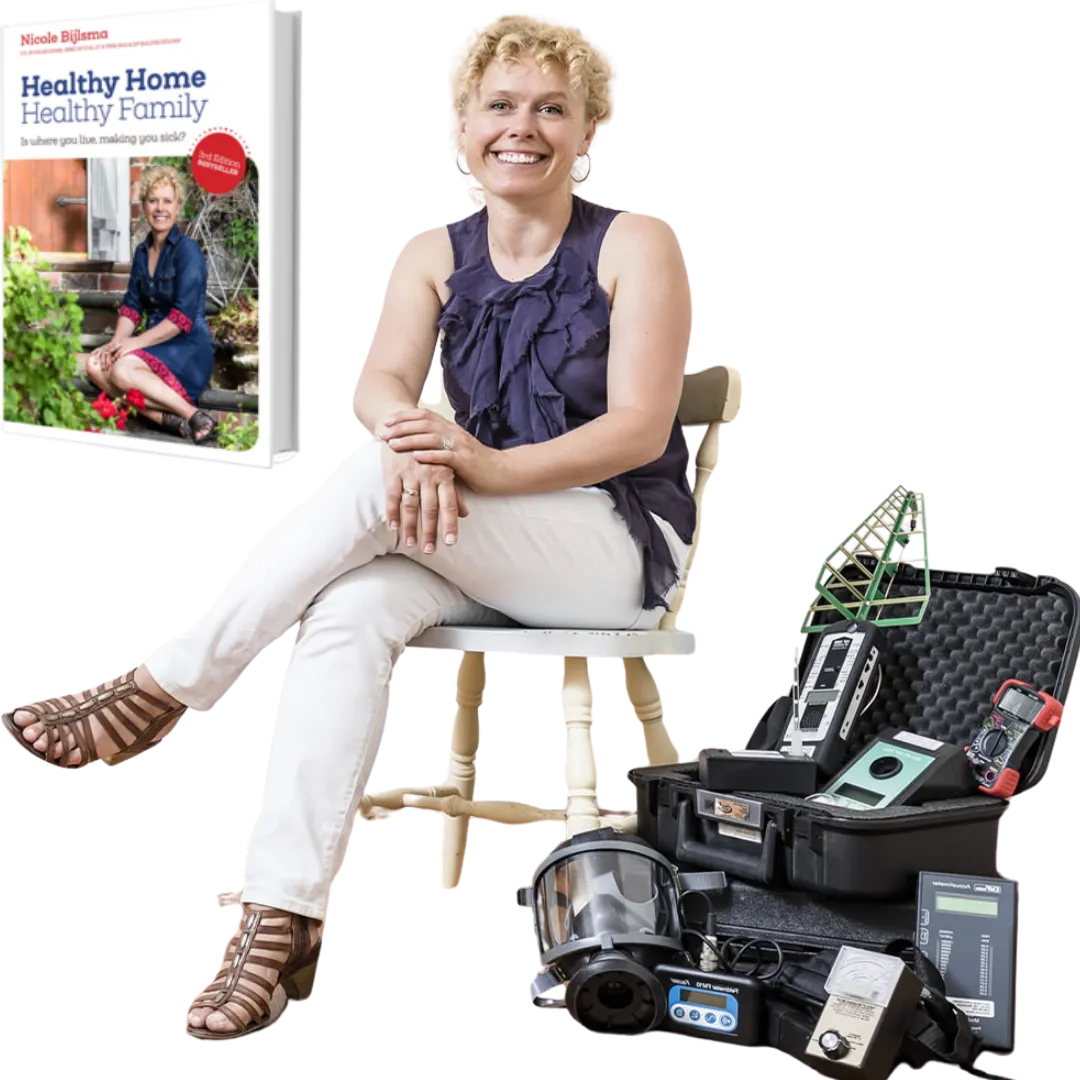
I have spent the past 25 years investigating the health hazards in the home, much of which I share with you on this website. This takes time, alot of time in fact and for much of my journey it has been a labour of love that ultimately resulted in the first edition of my book in 2012– Healthy Home Healthy Family. Like you, I was frustrated that nobody could help us understand why we couldn’t start a family, and we spent thousands of dollars seeking advice from health practitioners all over the country to no avail. However as I began to unravel the timing of events, it became immediately obvious that our health declined when we moved into our home – poor sleep and fatigue initially, followed by lots (10) of miscarriages. At the same time, several of my patients with Chronic Fatigue Syndrome in the 1990s were asking about mould in their home. Could their be a connection? As I waded through the research on chemicals in household products, electromagnetic fields and allergens like mould, it began to dawn on me that our homes could be making us sick.
Featured Videos
About ACES
The Australian College of Environmental Studies (RTO 21740) was established by Nicole in 1999 to create financially rewarding careers that enhance the health of the community. It is a registered training organisation (21740) that provides nationally accredited training in:
Building Biology
Electromagnetic Field Testing
Feng Shui
Mould Testing
Professional Organising
Space Clearing

As Seen On






Get my book
Testimonials
When you wake up to realise you’ve spent your whole life being chlorinated, fluoridated, vaccinated, irradiated, contaminated, manipulated, indoctrinated, medicated, subjugated by laws, intoxicated by industry, emasculated by hormone disrupters, and indebted to corporations that want you scared, sick, helpless, hopeless, jobless and dead.... either go back to sleep, or read this book

Frequently Asked Questions
What is mould and why is it growing in my home?
Mould is a type of filamentous fungus (as opposed to mushrooms and yeasts) that grows on damp building materials such as plasterboard, timber, carpet, and dust when moisture and poor ventilation are present. Mould is naturally present in homes due to drift from outdoor air. It becomes an issue where there is persistent moisture in the form of liquid water and/or elevated water vapour (humidity) which encourages mould growth. It is important to maintain and clean your home on a regular basis to prevent leaks, condensation, flooding, or high indoor humidity, especially in bathrooms, bedrooms, and poorly ventilated areas. By understanding that mould is always a sign of excess moisture, you can focus on fixing the cause of dampness in your home rather than just wiping away visible spots.
Is mould in my house dangerous to my health?
Mould in your house is not just an eyesore; it can be a serious health risk, particularly for babies, children, pregnant women, elderly people, and anyone with asthma or allergies. Living in a damp or mouldy home is linked to asthma, allergies (hayfever), recurrent colds and flus that are persistent and keep coming back, bronchitis, chronic sinusitis, headaches, and in some cases may contribute to chronic fatigue like symptoms characterised by brain fog and long term fatigue that is not alleviated by rest. Sometimes this is misdiagnosed as an autoimmune problem. If your symptoms improve when you leave the building, it is a strong sign that mould or indoor dampness in your home or rental may be affecting your health.
What are the most common symptoms of mould exposure?
The most common symptoms of mould exposure are respiratory - a blocked or runny nose, sneezing, cough, sore throat, chronic sinus congestion, wheezing, and shortness of breath. Many people also report headaches, brain fog (poor short term concentration and memory, missing words midsentence…), fatigue, sleep disturbances, skin rashes, and sensitivity to smells and chemicals when they are in a mould-affected home. If these symptoms appear or worsen at home and ease when you are at work, on holiday, or outdoors, your indoor environment maybe the issue and should be tested.
How can I tell if I have a mould problem if I can’t see it?
Great question. Unfortunately you don’t. Most of the worst homes Ive tested, I cannot see or smell mould, there has been no recent water event and the moisture testing is unremarkable (its dry throughout the home). The sampling data however, revealed a very different story – high levels of water damaged moulds (Aspergillus, Penicillium), with or without tertiary colonisers (Chaetomium, Stachybotrys…).
Signs that mould could be an issue are visible mould, musty or damp earthy odours, water stains, peeling or bubbling paint, warped skirting boards, frequent condensation on windows, and a history of leaks or flooding. If your health improves when you spend time away from the building, it is worth getting a Mould Testing Testing technician/Building Biologist or IEP to investigate.
Does black mould mean my home is toxic?
“Black mould” is a descriptive term for mould colour and does not automatically mean your home is toxic, but may indicate a moisture problem that needs attention. When people refer to dark moulds, they generally refer to Stachybotrys (‘sticky balls’), a tertiary coloniser associated with serious health effects. In reality, the same mould can be different colours depending on the material it is growing on. A good example is Aspergillus and Penicillium. It can be white on white painted cupboard doors and black on metal window frames. The colour is not a good marker to identify the mould. Rather than relying on colour alone, focus on identifying the source of water damage, assessing the extent of contamination, and safely removing mould-affected materials.
Why does mould keep coming back after I clean it?
If mould keeps coming back after you clean it, the underlying moisture problem has not been properly fixed. Common causes include ongoing plumbing leaks, roof leaks, damp concrete slabs, poor bathroom and kitchen exhaust, condensation on cold walls and windows, and lack of subfloor ventilation. Until you stop the moisture, dry the area thoroughly, and remove contaminated materials where necessary, mould will continue to regrow no matter what cleaning product you use.
Should I use bleach to clean mould in my home?
No! Bleach is an antibacterial that is not effective against mould, rather it bleaches it. Bleach hides the mould as opposed to physically removing it, which is what is required in professional mould remediation. Effective mould remediation focuses on finding and fixing moisture sources, physically removing mould-affected materials, and using safe, appropriate cleaning methods on sound surfaces.
When can I clean mould myself and when do I need a professional?
You can clean small patches of mould yourself if the affected area is limited (less than 1m2), the surface is non-porous, the source of moisture has been addressed and fixed, and no one in the household is highly sensitive or unwell. You should call a professional mould inspector or remediator if there is widespread visible growth that exceeds 1m2, a history of major leaks or flooding, a musty smell you cannot locate, or repeated regrowth after cleaning. High risk populations such as children, elderly family members, or people with asthma, allergies, or chronic illness live in the home, should not be cleaning the mould as the disturbance will dramatically increase your exposure to elevated spore counts. Consider a professional remediator provides a safer, more comprehensive solution.
Is it safe to stay in my home during mould remediation?
Whether it is safe to stay in your home during mould remediation depends on the size of the problem, the methods being used, and your health. In some cases, professionals can set up containment and negative air pressure to isolate the work area, allowing parts of the home to remain occupied by people who are not medically vulnerable. If there is extensive contamination, significant demolition, loss of amenity (*cant use the kitchen for example) or occupants with serious health conditions, infants, or pregnancy, temporary relocation during mould remediation may be the safest option to protect your health.
What humidity level should I keep my home at to prevent mould?
To prevent mould growth, you should aim to keep indoor relative humidity generally between about 40% and 60%. Prolonged humidity above 65% encourages condensation on cold surfaces and drives mould growth on windows, walls, wardrobes, and furnishings. Using bathroom and kitchen exhaust fans that are cleaned monthly, improving natural ventilation when weather allows, heating appropriately, and using dehumidifiers in damp rooms can all help keep indoor humidity in a healthier range and protect your home from mould.
Do dehumidifiers and air purifiers help with mould?
Dehumidifiers are not air purifiers. A dehumidifier removes moisture from the air and are useful in homes in humid climates, poorly ventilated rooms, basements, and areas with chronic condensation (bathrooms, laundry, kitchen or bedrooms). In contrast, air purifiers clean the air by removing particulate matter and/or chemicals. An air purifier with a H class HEPA filter is generally very effective to reduce exposure to airborne mould. However, neither dehumidifiers nor air purifiers fix water damage or mould-contaminated materials on their own, so they should be used as part of a broader moisture and mould management plan in your home or rental.
Can mould in a rental property make me sick and what should I do?
Mould in a rental property can absolutely affect your health, just as it can in any home, and renters are often exposed for longer because they have limited control over repairs. If you see visible mould, notice musty odours, or experience symptoms that improve when you are away from your rental, document everything with photos and dates and notify your rental provider (landlord) or property manager in writing (which you are obliged to do under the Tenancy Regulations). Ask for prompt investigation and repair of leaks, dampness, and mould-affected materials, and if the problem is not resolved, seek advice about your rights as a tenant through your local tenancy authority, health department, or legal service.
How quickly does mould grow after a leak or flood?
Microbial growth starts within 24 to 48 hours after a leak, overflow, or flood if building materials are not dried quickly and thoroughly. As water sits in carpets, underlay, plasterboard, timber, and insulation, it penetrates deeper into the structure, making effective restoration more complex and expensive and increasing the risk of long-term mould problems. Rapid action to stop the water, extract standing water, remove non-salvageable materials, and professionally dry the building is essential to prevent extensive mould growth after any water event.
Can mould grow in air conditioners and HVAC systems?
Yes, mould and bacteria are commonly found in air conditioners, ductwork, and HVAC systems when there is moisture, dust, and organic debris for it to feed on. Dirty filters, blocked condensate drains, and poorly maintained units create perfect conditions for mould and bacteria, which can then be circulated throughout your home every time the system runs. Regular servicing, filter cleaning and changes, proper drainage, and professional cleaning of contaminated components are crucial to maintain healthy indoor air quality and prevent mould spreading via your cooling and heating system.
How can I prevent mould in bedrooms and wardrobes?
To prevent mould in bedrooms and wardrobes, focus on keeping spaces dry, warm enough, and well-ventilated and NEVER use a humidifier! Avoid pushing beds and furniture tightly against cold external walls, leave a small gap for air flow, and do not overfill wardrobes so air can move around clothing and shoes. Avoid curtains in front of single pane windows, and open windows when outdoor conditions are warm and dry, remove condensation on windows and walls promptly, and clean windows monthly so moisture and food does not accumulate and create ideal conditions for mould.
Should I test my home for mould, and which mould test is best?
Mould testing can be helpful to quantify fungal particulate in the home especially when you suspect the mould is hidden, have little visual data (no visible mould or water staining, no odour), have health symptoms no one can explain (such as recurrent respiratory symptoms or fatiguing syndrome) and the symptoms are worse when you are in your home. In many cases, the visible evidence – musty odours, water staining, condensation, and health symptoms that improve when you leave – is enough to justify fixing moisture problems and removing mould-affected materials. When testing is indicated, a trained Mould Testing Technician, Building Biologist, or Indoor Environmental Professional can select the most appropriate methods (such as spore trap air samples, surface sampling, or dust testing) and interpret the results in the context of your building, not just a lab print-out.
What is the difference between mould stains and active mould growth?
Mould stains are the discolouration left behind on surfaces after active growth has occurred, whereas active mould growth means the organism is currently alive and able to release spores and fragments into your indoor air. Microbes generally emit odours when they are growing. Even when a surface has been cleaned, staining may remain because pigments and damage are embedded within the material, especially on timber, plasterboard, silicone and grout. From a health perspective, dead mould can still and often does make people sick, so the goal is to physically remove the mould as opposed to ‘bleaching’ it..
Can new, energy-efficient homes still have serious mould problems?
Yes, new and energy-efficient homes can have significant mould problems if moisture is trapped and ventilation is inadequate resulting in interstitial condensation and mould in wall assemblies for example. Modern construction tends to be more airtight, which is excellent for energy performance but can backfire when there is poor exhaust in bathrooms and kitchens, unventilated roof spaces, cold bridges in walls, or wet materials sealed up during the build. The result is condensation on cold surfaces, hidden mould behind wardrobes and in wall cavities, and health complaints in occupants who are surprised that a “brand-new home” can still be making them sick. The key here is to encourage air flow and open windows on warm dry days, and heat the entire house during winter time to prevent cold pockets that increase the risk of condensation.
How can I choose a safe temporary place to stay if my home has mould?
If you need to relocate during mould remediation, choose temporary accommodation that is as dry, well-ventilated, and low in “musty” or chemical odours as possible. Before committing, spend time in the space and notice whether you experience symptoms such as congestion, coughing, headaches or fatigue, and whether these are better, worse, or the same as in your current home. Avoid obviously damp or poorly maintained properties, ask about any history of leaks or flooding, and prioritise accommodation with good natural light, functioning exhaust fans, and windows that can open to allow regular airing.
How should I remediate my sofas and mattress?
If you lived in a damp home or home that had high levels of mould in your living space or bedroom, there’s a good change your soft furnishings and bedding will be contaminated. Unfortunately, these items cant be remediated effectively and time and time again, Ive seen clients contaminate the next home by dragging these items from one place to another. Don’t buy second hand or receive hand me down furnishings and don’t store them in an unconditioned space such as a garage, shed or storage container, as this is a common cause of contamination.
COMPANY
NEWS
LEGAL


© Copyright 2026. ACES. All Rights Reserved.